As an Amazon Associate I earn from qualifying purchases.

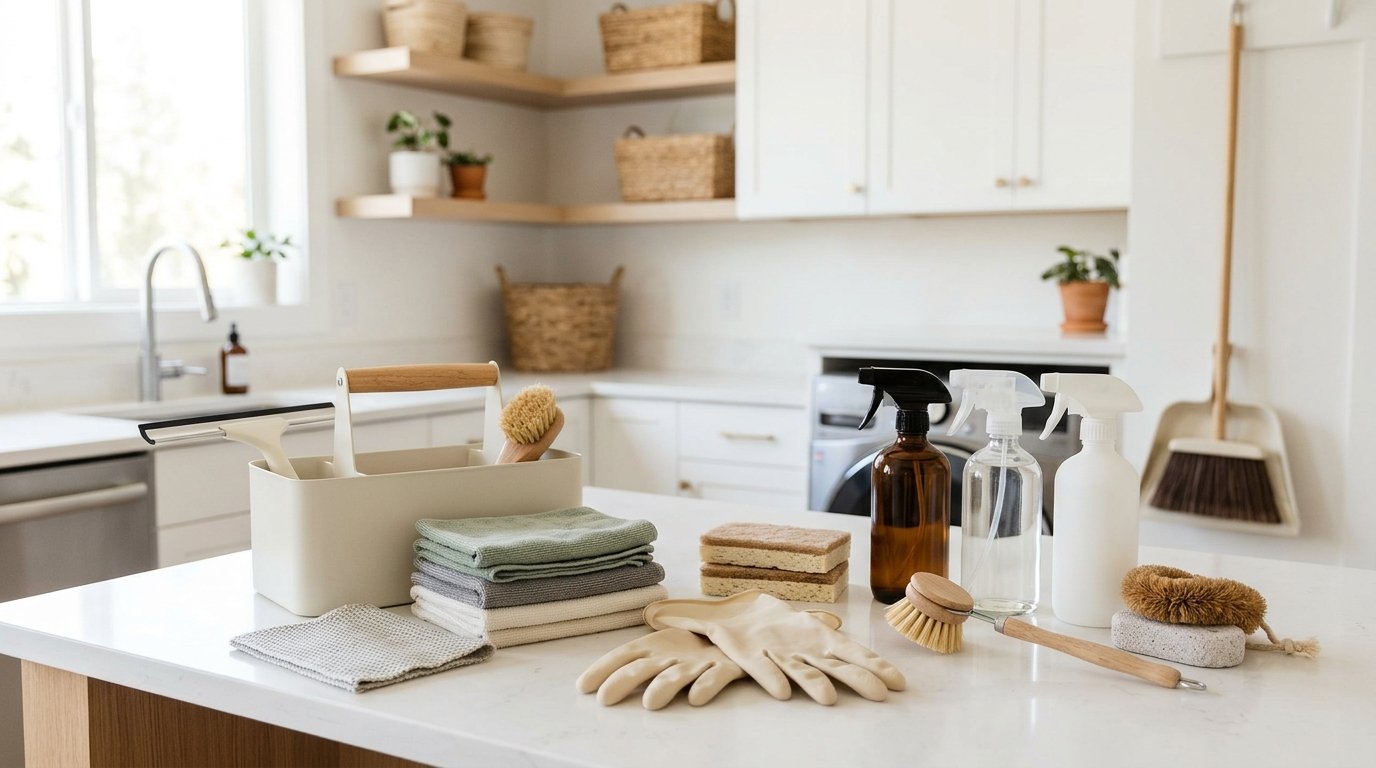
Keeping a home clean doesn’t have to mean filling your cabinets with dozens of cleaning products and tools. Often, a small collection of useful supplies is enough to handle everyday messes and make household chores more manageable.
Whether you’re setting up your first home or simplifying your current cleaning routine, it helps to know which items are worth keeping on hand. The right supplies depend on your home’s surfaces, your cleaning habits, and the kind of messes you deal with most often.
Here are 12 practical cleaning supplies to consider, along with tips for choosing and using them.
1. Microfiber Cleaning Cloths

Microfiber cloths (visit link) are useful for wiping countertops, dusting furniture, and cleaning many everyday surfaces. They’re reusable, easy to wash, and can help reduce the need for disposable paper towels.
Keep a few cloths available for different tasks, such as kitchen surfaces, bathroom cleaning, and general dusting. Washing them regularly helps prevent dirt from being spread from one area to another.
Helpful tip: Follow the manufacturer’s washing instructions, and avoid fabric softener if the cloth’s care label advises against it.
2. An All-Purpose Cleaner

An all-purpose cleaner can be convenient for routine cleaning when it’s suitable for the surface you’re working on. Depending on the product, it may be useful for certain countertops, washable surfaces, and everyday household messes.
You don’t necessarily need several similar sprays. Start by checking which surfaces in your home need regular attention, then choose a cleaner labeled for those materials.
Helpful tip: Always read the product label, test an inconspicuous area when appropriate, and never mix cleaning products.
3. Scrub Brushes

A good scrub brush can help remove stubborn dirt from suitable surfaces where a cloth alone isn’t enough. Smaller brushes are useful around taps, sink edges, and other tight areas, while larger brushes may work better for broader surfaces.
Choose bristles that suit the task. Softer bristles may be appropriate for delicate finishes, while tougher brushes should only be used on surfaces that can tolerate them.
Helpful tip: Rinse brushes after use and let them dry thoroughly to help keep them clean between tasks.
4. Non-Scratch Sponges

Sponges are handy for washing dishes and cleaning certain kitchen and bathroom surfaces. A non-scratch sponge (visit link) can be useful when you want to avoid damaging a finish, but it isn’t automatically safe for every material.
Check the sponge packaging and the surface manufacturer’s care instructions before using it on nonstick cookware, polished fixtures, or delicate finishes.
Helpful tip: Rinse sponges well after use, allow them to dry, and replace them when they become worn or develop persistent odors.
5. A Cleaning Caddy

A cleaning caddy keeps frequently used supplies together, making it easier to carry them from room to room. It can also help prevent bottles, cloths, and brushes from becoming scattered in different cupboards.
You don’t need a large or elaborate organizer. Choose one with enough room for the supplies you regularly use, a comfortable handle, and a design that’s easy to wipe clean.
Helpful tip: Store chemicals in their original containers, keep them upright, and never put incompatible products together in a way that risks leaks or accidental mixing.
6. Rubber Cleaning Gloves

Reusable household cleaning gloves can help protect your hands from dirt, moisture, and some cleaning products. They may be particularly useful for washing dishes, cleaning bathrooms, or handling products that specify gloves should be worn.
Choose gloves that fit comfortably and are appropriate for the cleaning tasks you do. Keep in mind that ordinary household gloves aren’t suitable protection against every chemical.
Helpful tip: Follow the cleaning product’s safety instructions, and rinse and dry your gloves after use.
7. A Glass Cleaning Cloth

Glass surfaces, mirrors, and windows can show streaks and fingerprints easily. A suitable glass-cleaning cloth can help with routine wiping and may reduce the need for disposable paper towels.
Some microfiber cloths are designed specifically for glass, so look for one that matches your needs. For the best results, use the cleaning method recommended for the particular glass or mirror surface.
Helpful tip: Use a clean cloth rather than one that has collected grease or residue from other cleaning tasks.
8. A Floor Mop That Suits Your Flooring

A mop can make routine floor cleaning easier, but the right choice depends on your flooring and the manufacturer’s care instructions.
A flat mop may be convenient for everyday dust and light dirt, while other mop styles may suit different floor types. Consider how easy the mop head is to wash, replace, and store.
Helpful tip: Avoid using excessive water on wood, laminate, or other moisture-sensitive flooring. Use only cleaning products and methods approved for your floor.
9. A Broom and Dustpan

A broom and dustpan remain useful for collecting crumbs, dust, and loose debris from floors. They’re especially convenient for quick cleanups after cooking, eating, or doing crafts.
Choose a broom that suits your floor type and has bristles that can reach the areas you need to clean. A dustpan with a comfortable handle can make collecting debris less awkward.
Helpful tip: Sweep dirt into a manageable pile and empty the dustpan promptly rather than leaving debris around the room.
10. A Lint Roller

A lint roller is a handy tool for picking up loose hair, lint, and small particles from suitable fabrics. It can be useful for clothing, cushions, and certain upholstered surfaces.
If you have pets or frequently deal with lint, keeping one near your entryway or laundry area may make quick touch-ups more convenient.
Helpful tip: Check the fabric care instructions before using an adhesive roller on delicate materials, since some fabrics may snag or be affected by the adhesive.
11. A Grout Cleaning Brush

A narrow grout brush can help reach the lines between tiles and other small spaces that are difficult to clean with a larger brush. It may be useful in bathrooms and kitchens where compatible tiled surfaces need occasional attention.
Choose a brush designed for the surface you’re cleaning, and avoid aggressive scrubbing that could damage grout or surrounding finishes.
Helpful tip: Use a cleaning product approved for your tile and grout, follow the label instructions, and provide suitable ventilation when required.
12. Reusable Cleaning Cloths or Mop Pads

Reusable cloths and washable mop pads can be practical alternatives to disposable cleaning materials for many routine tasks. Having a small supply means you can use a clean cloth when needed without having to wash it immediately.
Keep used cloths separate from clean ones until laundry time. Wash them according to their care instructions, particularly after cleaning greasy or heavily soiled areas.
Helpful tip: Assign cloths to particular tasks or rooms to reduce the risk of transferring dirt between surfaces.
How to Build a Cleaning Kit Without Overspending

You don’t need to buy all 12 items at once. Start with the supplies that address your most common household tasks, such as a few microfiber cloths, a suitable cleaner, a sponge, and a broom.
Before purchasing anything new, check what you already own. You may only need to replace worn tools or add one item that solves a specific problem.
When comparing products, consider durability, ease of cleaning, storage space, and whether the item is appropriate for your home’s surfaces. A simple, well-chosen cleaning kit is often more useful than a cabinet full of supplies you rarely use.
Final Thoughts
A manageable cleaning routine starts with tools that suit your home and the tasks you do regularly. Microfiber cloths, brushes, a caddy, and the right floor-cleaning tools can help you stay prepared without making cleaning more complicated than it needs to be.
Start with the basics, keep your supplies clean and organized, and add new items only when they serve a clear purpose. The goal isn’t to own more cleaning products—it’s to make everyday cleaning easier to manage.
Disclosure: As an Amazon Associate I earn from qualifying purchases.